


 (860) 644-1548


Hurt at Work: Who Should I Call First? (and Why It Shouldn’t Be the Insurance Adjuster)
If you were hurt at work, the first few calls you make can affect your medical care, your benefits, and the strength of your workers’ compensation claim. Many injured workers assume the insurance adjuster is the right person to call first because that person may seem helpful, official, or ready to “get the claim moving.” But the insurance adjuster works for the insurance company, not for you.
That does not mean every adjuster is dishonest. It means their job is to manage the claim for the carrier, limit unnecessary payouts, and protect the insurance company’s interests. Your job is to protect your health, your income, and your legal rights.
So, who should you call first after a workplace injury? In most cases, like getting hurt while driving for work, you should report the injury to your employer, get medical attention, and speak with a workers’ compensation attorney before giving detailed statements to the insurance company. Here is why that order matters.
Hurt at Work? Call Your Employer First, But Be Careful What You Say
If you are hurt at work, you should report the injury to your employer as soon as possible. Waiting too long can create problems later, especially if your employer or the insurance company tries to argue that the injury did not happen at work or was not serious enough to report.
Your report should be clear, simple, and factual. Tell your supervisor when the injury happened, where it happened, what you were doing, and what part of your body was hurt. For example, you might say, “I hurt my lower back while lifting boxes in the warehouse this morning,” or “I slipped on a wet floor near the entrance and injured my knee.”
Try not to guess about your diagnosis. Do not downplay your pain just to get through the shift. Many workers say things like “I’m fine” or “It’s probably nothing” because they do not want to cause trouble. Later, those casual comments can be used to question the seriousness of the injury.
You should also ask your employer what paperwork needs to be completed. In Connecticut, workplace injuries are part of a formal workers’ compensation system. Reports, notices, medical records, and timelines all matter. Even if your employer is supportive, you should still keep your own notes about what happened and when you reported it.
Why You Should Get Medical Care Before Talking to the Insurance Adjuster
Your health should come before any conversation with the insurance company. If the injury is serious, seek emergency care right away. If it is not an emergency, ask your employer where you should go for initial medical treatment and follow the proper process for your workplace injury claim.
Medical records are one of the most important parts of a workers’ compensation case. They show when you sought treatment, what symptoms you reported, what the doctor found, and whether your injury is connected to your job. If you delay treatment, skip appointments, or fail to describe all of your symptoms, the insurance company may use that gap against you.
Be honest and complete with your medical provider. Explain exactly how the injury happened at work. Mention every area of pain, even if one injury feels worse than the others. A shoulder injury, back injury, head injury, or knee injury may seem manageable at first, but symptoms can worsen over time.
You should also follow your doctor’s restrictions. If your doctor says you should not lift, bend, stand for long periods, or return to full duty, take that seriously. Returning too soon can make your injury worse and may create confusion about your claim.
Why the Insurance Adjuster Should Not Be Your First Call After You Are Hurt at Work
The insurance adjuster may contact you quickly after the injury is reported. They may ask how you are feeling, what happened, whether there were witnesses, whether you have had prior injuries, and whether you are ready to return to work. These questions may sound routine, but your answers can shape the direction of your claim.
The adjuster’s role is not the same as your attorney’s role. An adjuster evaluates the claim for the insurance company. That means they may look for reasons to limit benefits, deny certain treatment, challenge whether the injury is work-related, or argue that a pre-existing condition caused your pain.
One common mistake injured workers make is giving a recorded statement before understanding their rights. You may be tired, medicated, anxious, or unsure of the medical details. You may accidentally leave something out or describe the accident in a way that creates confusion. Later, that statement may be compared against your medical records, employer report, or testimony.
Another mistake is accepting the adjuster’s explanation as legal advice. The adjuster may explain what the insurance company is willing to pay, but that is not the same as telling you everything you may be entitled to receive under Connecticut workers’ compensation law.
Before you give detailed statements, sign forms, or agree to a return-to-work plan, it is smart to speak with a hurt at work attorney who can explain what the process means for you.
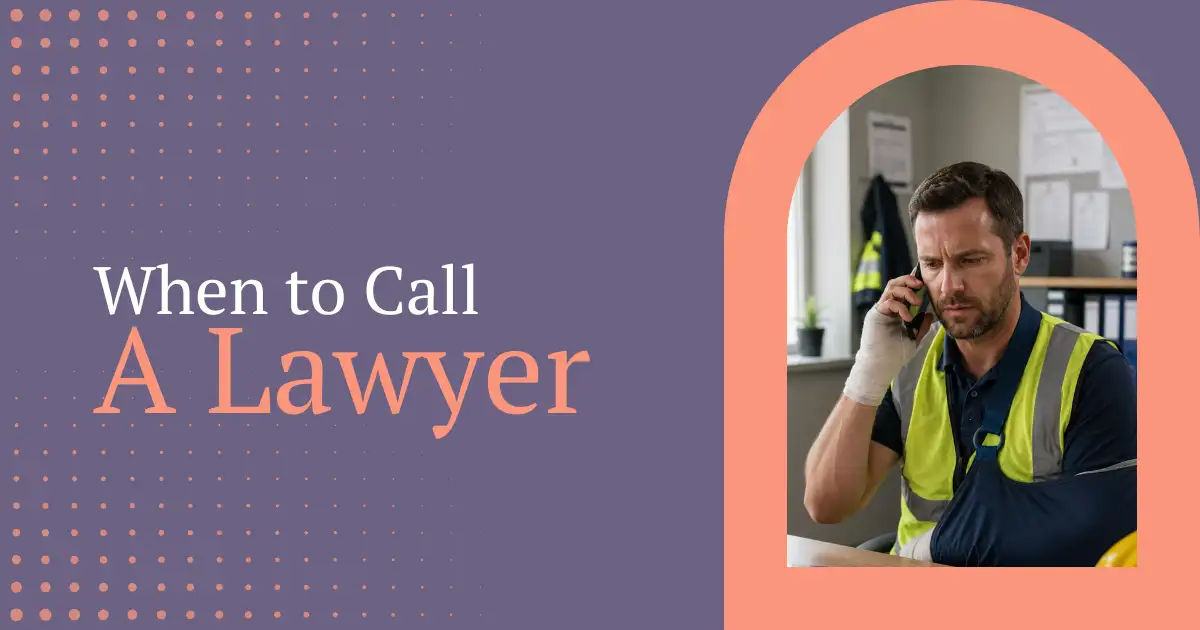
When to Call a Lawyer
You should call a lawyer as early as possible if your injury is serious, your employer is pressuring you, your benefits are delayed, your medical treatment is denied, or you are unsure what to do next. You do not need to wait until everything goes wrong.
In fact, waiting is one of the biggest mistakes injured workers make. Many people call an attorney only after the insurance company denies treatment, stops checks, disputes their injury, or pushes them back to work before they are ready. By then, important records may already be incomplete, deadlines may be closer, and the insurance company may already have your statement.
A lawyer can help you understand what should happen after the injury is reported, whether the claim is being handled properly, and what to do if the insurance company starts creating obstacles. A lawyer can also help protect you from saying or signing something that hurts your case.
This is especially important if you have a significant injury, need surgery, cannot work, have permanent restrictions, or believe someone other than your employer may also be responsible. For example, if you were hurt in a motor vehicle crash while working, bitten by a dog during a delivery, or injured in a slip and fall caused by another company’s negligence, there may be more than one legal issue involved.
I Got Hurt at Work. Will I Get a Settlement?
One of the most common questions injured workers ask is, “I got hurt at work, will I get a settlement?” The honest answer is: a full and final settlement is not a guarantee with your workers’ compensation case. In the state of Connecticut, both parties (the insurance company and yourself), have to both want to settle the case in order for a settlement to be reached.
Not every workers’ compensation claim ends in a settlement. Some claims involve medical care and wage benefits while you recover, then close without a lump-sum payment. Other claims may involve a settlement if both you and the insurance company are able to reach an agreement. If the insurance company agrees to settle, we evaluate: permanent injuries, long-term work restrictions, disputed benefits, future medical needs, or questions about your ability to return to your old job.
A settlement is not just about the pain you feel today. It may involve your medical history, your diagnosis, your work restrictions, your future treatment, your lost wages, and whether you have any permanent impairment. The insurance company will look at these details carefully, and so should you.
This is another reason not to rely on the adjuster as your main source of information. The adjuster may discuss settlement from the insurance company’s point of view. A hurt at work lawyer can look at the bigger picture and help you understand whether a settlement offer is fair based on your injury, your medical needs, and your future.
Before you agree to settle, you should understand what rights you may be giving up. A quick payment may feel helpful in the moment, especially if you are out of work, but it may not protect you if your injury requires more treatment later.

How Lawyers Help Protect Your Claim
Experienced lawyers do more than fill out forms. They help you avoid mistakes that can weaken your claim. They can communicate with the insurance company, review medical records, identify missing documentation, help with denied treatment, and explain what benefits may apply to your situation.
They can also help when your employer says you must return to work before your doctor clears you, when your checks are late, or when the insurance company claims your injury is not work-related. These situations can feel overwhelming when you are already dealing with pain, appointments, and financial stress.
A workers’ compensation attorney can also look for third-party claims. Workers’ compensation usually deals with benefits through your employer’s insurance. But if another person, company, driver, property owner, or contractor caused your injury, you may have a separate personal injury claim. That separate claim may allow recovery for damages not usually available through workers’ compensation alone.
For example, a delivery driver hit by another driver while working may have a workers’ compensation claim and a claim against the at-fault driver. A construction worker injured by a subcontractor’s unsafe actions may have more than one path to recovery. A teacher, police officer, UPS worker, or union worker may face unique job-related risks that deserve careful legal review.
Hurt at Work Lawyer Guidance Can Make the Process Less Stressful
Getting hurt at work can leave you with more questions than answers. You may be worried about your paycheck, your job, your medical bills, and whether your employer will treat you differently after you report the injury. You may also feel pressure to cooperate with the insurance company before you fully understand what your rights are.
That is why the first call should not be to the insurance adjuster for legal guidance. Report the injury. Get medical care. Then speak with a hurt at work attorney who can help you understand the workers’ compensation process before the insurance company controls the conversation.
The right legal guidance can help you avoid common mistakes, protect important deadlines, and understand whether you may be entitled to medical benefits, wage replacement, or a possible settlement. It can also give you a clearer path forward when treatment is delayed, benefits are disputed, or your employer pressures you to return before you are ready.
If you were hurt at work in Connecticut, getting answers early can make the process less stressful. Learn more about your options by speaking with a Connecticut workers’ compensation attorney who can explain your rights and help you take the next step.